



The evolution of internet technology
16th November, 2020 | Home / Blog / Broadband technology / The evolution of internet technologyReading time: 3 minutes

It can be difficult to remember a time before instant connections and sky-high internet speeds. From the time-consuming days of dial-up to today’s ultrafast fibre technology – it’s clear we’ve come a long way. And there’s no end for where technology will take us next.
Join us on a trip down memory lane and discover how the internet has evolved over time.
The days of dial up
 Remember the dreaded sound of dial-up?! The painfully slow and loud dialling noise that was your signal connecting to the internet.
We laugh at it now, but dial-up internet was ground-breaking in its time! Dial-up relied on a phone line and analog-modem to deliver the connection, which made the internet easily accessible (and inexpensive!) for many households and businesses. (But using your landline at the same time meant you had to reconnect and endure that sound all over again!) ?
Broadband is born
 Several years later, we welcomed the launch of commercial broadband into our digital lives. Gone were the tangled wires and the noisy dialling tone, and the service through DSL was much quicker too.
Digital Subscriber Lines also operated through copper telephone lines and a modem, yet this new technology had evolved from dial-up’s agonizingly slow connection speeds. Instead, DSL was an “always on” service, which meant you could browse the web and use your landline at the same time.
The new kid on the block, DSL, was the first technology to offer a faster signal to the internet. This is where “broadband” was born, a term you’ll commonly hear these days.
The world welcomes Wifi
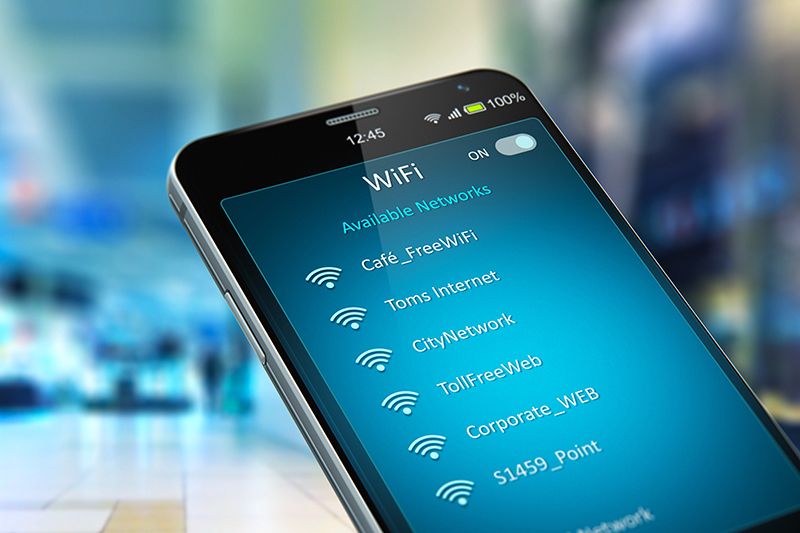 Fast forward to the early 2000’s, internet technology was no longer hindered by having to use a phone line to connect to the world wide web. This progression in technology meant accessing the internet was far easier than ever before – and as internet use sky-rocketed, we gladly welcomed Wifi into our world.
The introduction of wireless signals opened up the flood gates for high speed connections and improved service in the digital world. No longer would we have to plug Ethernet cables into a computer to surf the web or check our emails – wireless technology was futuristic, and it’s something we still rely on today.
It’s rare to go into any business these days and not be able to access a Wifi signal. Failing that, many of us are able to access the internet wherever we go through our smart phones, laptops or a hotspot, thanks to mobile cellular data and 2G, 3G, 4G, and now 5G technology!
The fibre future
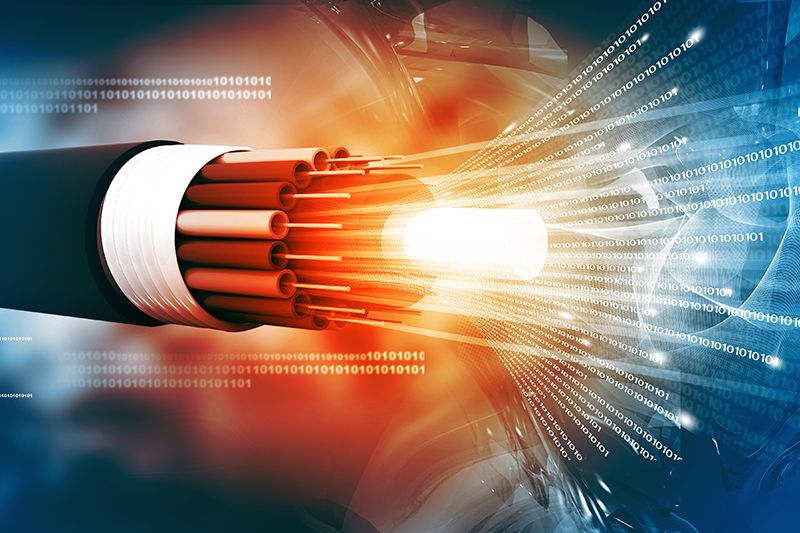 Just when we thought connectivity couldn’t get any better, a new player entered the broadband game – and it’s a real game changer too. World, meet fibre: the future of the internet.
Fibre-to-the-premises broadband (FTTP) is the fastest internet connection on the market. Instead of using copper, new fibre optic cables are laid to deliver the connection directly into your home or business.
Fibre broadband unlocks the potential for greater speeds and fewer issues compared to standard copper connections. Here’s how:
It’s all about how quickly data can be sent and received and with fibre optic cable, it literally travels at the speed of light! Fibre optic cables also have less interference than copper, so they can keep the signal strength over larger distances, making the connection much more reliable. Fibre is seen as a futureproof solution for broadband due to its immense capabilities, which is good news – especially as copper connections are due to be phased out by 2026.
The future of internet technology
So here we are, it’s 2020 and the future looks set to be full of fibre broadband – although in the rapidly-evolving world of technology, there’s no guessing for where the future of the internet will take us in 2021 and beyond.
To make sure your connection can keep up, try out our broadband coverage checker to see if you can boost your speeds and get a better connection with Airband.
Alternatively, you might like:
- what is fibre broadband?
- what is the difference between FTTC and FTTP?
- what is the difference between broadband and Wi-Fi?


Check availability:
