



Broadband for rural areas
We’re Airband. An independent ISP with a “rural first” focus. Since 2015 we’ve been bringing superfast full fibre and fixed wireless broadband to hard-to-reach, rural areas across our network. So no matter if you’re in the countryside in Devon or in a village in Gloucestershire, our rural broadband’s got your back.
With download speeds up to 1000Mbps, you can find the perfect broadband package for you.
Our rural internet coverage
This is rural internet built for you. Because we run our own network, we can bring the lightning-fast speeds of the city to rural homes and hard-to-reach villages – the places many other providers leave behind.
From the South West and Wales to Oxfordshire and the Midlands, we continually invest in our communities you can see below.

Live in Cheshire and want faster broadband speeds?

Wanting faster fibre broadband in Cornwall?
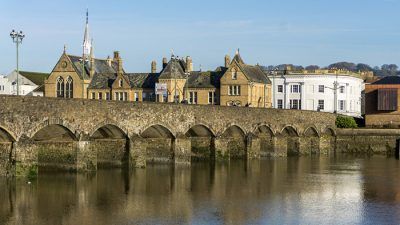
Live in Devon and looking for ultrafast broadband speeds?
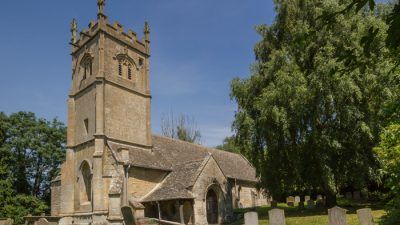
Get ultrafast broadband speeds in Gloucestershire

Get ultrafast broadband across Herefordshire

Do you want fibre broadband in Oxfordshire?

Live in Shropshire and want fibre broadband?

Looking for ultrafast broadband in Somerset?

Wanting faster broadband in Wales?
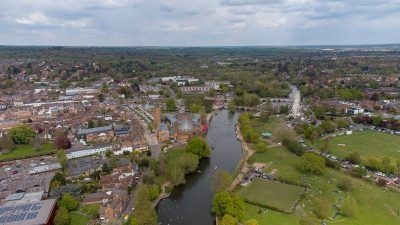
Live in Warwickshire and after better broadband?
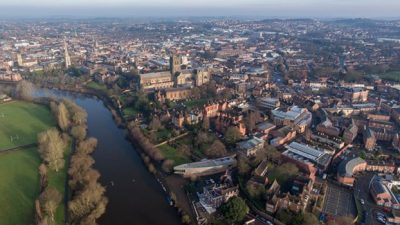
Do you want fibre broadband in Worcestershire?
How fast are you going now?
Find out what broadband speeds you are currently getting by heading over to our broadband speed test.
What broadband services are available in rural areas?
Here’s the good news: there’s never been a better time to get internet access if you live rurally. For years, homes outside the city were cursed with high latency and slow connections, but that’s changed, and today you’ve got more choice than ever.
Fibre broadband
Full fibre is the fastest, most reliable way to get online in the UK. The catch? It isn’t everywhere yet, and rural communities are often the last to get connected.
That’s where we come in. The full fibre we build is fibre-to-the-premises (FTTP) – an end-to-end fibre connection running straight from the exchange into your home, with no copper anywhere along the way. That means no bottleneck and a dependable link with superfast broadband speeds of up to 1000Mbps (or 1Gbps).
Just be aware that not every “fibre” plan is the same. Older options like fibre-to-the-cabinet (FTTC), also known as “part fibre”, only run fibre as far as the street cabinet, then lean on a copper phone line for the rest – so the further your rural home sits from that cabinet, the slower your internet connection. True full fibre does away with that entirely, which is why it’s the plan worth holding out for.
Learn more about our full fibre broadband broadband here.
Fixed wireless broadband
Fixed wireless broadband, also known as fixed wireless access (FWA), uses radio signals to connect you to the internet. Transmission mast radios communicate with a smaller radio receiver at your home. The main downside to fixed wireless is that you need line-of-sight to the mast to be connected, which limits who can get it, and how reliable it might be.
Have a look at our wireless broadband packages here.
ADSL broadband
ADSL broadband uses your copper telephone line to connect you to the internet. It’s similar to FTTC, except none of the connection uses fibre. Instead, the signal has to pass entirely through the outdated copper lines, which means extremely slow speeds.
Those copper lines are being switched off too – currently scheduled for the end of January 2027 – so any plan tied to the traditional phone line is living on borrowed time. If you still rely on a landline, our Airband Talk plans let you keep a home phone over an Airband broadband connection instead.
Satellite broadband
Satellite broadband is a type of wireless broadband that works by connecting a satellite with a receiver dish at your home. This is an option if you are very rural and can’t get a mobile signal. However, it is known for being both expensive and unreliable.
Mobile broadband
Mobile broadband (4G or 5G) uses the same signal as your phone to get you online. It’s a fair alternative where fixed-line options don’t reach, but download speeds swing with signal strength. Some providers fit an external receiver to lift the signal and improve speeds.
Does buying a rural home mean I will have slow internet forever?
Historically, rural properties tended to get slower download speeds for one simple reason: they’re further from the infrastructure that carries your connection. The greater the distance between your home and the nearest street cabinet, the weaker the signal by the time it reaches you – and that gap is far wider in a village than in a busy town or a city.
It doesn’t help that rural locations are harder and more expensive for providers to reach in the first place, so many are left running on ageing lines that were never built for the download speeds we need today. Stretch that over a long distance and average speeds fall away fast – which is why so many homes in more remote areas end up stuck with slow internet speeds.
But we’ve been working to change this!
Rather than patch up old lines, we build brand-new full fibre and run our own network right up to the property – so wherever your rural property is, you get a genuinely high speed broadband connection.
Is there anything else I can do to get faster broadband to my rural home?
Yes, if you’re not currently able to get full fibre or wireless broadband, there are several schemes available through the government, such as the gigabit voucher scheme. Check the Gov.uk eligibility page to see if your area is included.
You can also suggest a project to us if you’d like Airband to come to your community.
Find out how our projects work.
Do Airband offer landlines?
Yes – but not the old fashioned kind of landline. We offer a home phone through our Airband Talk plans, which run over our fibre lines rather than a traditional copper phone line. You might also know this as VoIP.
You get all the things you’d expect from a landline – a phone number, unlimited local and national calls, and a proper handset connection – just delivered over a modern network instead of ageing copper.
I’m not in network – will Airband ever reach me?
Quite possibly, yes. We’re extending our network across new rural locations all the time, so being outside our coverage today doesn’t mean you always will be.
The best first step is (if you haven’t already) to enter your postcode into our coverage checker. If we’ve not yet reached you, you can register your interest or suggest a project – the more homes and businesses in an area that put their hand up, the sooner we can look at building to you.
Community demand genuinely helps us decide where our network goes next.
It’s also worth checking whether a government gigabit voucher applies where you live, as these can help bring full fibre to harder-to-reach rural homes faster.
Okay, I’m ready to make the switch to Airband – what do I need to do?
Great news! Getting started is really simple.
- Check your coverage. If you haven’t already, enter your postcode in our broadband coverage checker to confirm we can reach your home and see the plans available to you.
- Pick your plan. Choose the download speeds you need. Add Airband Talk if you’d like to future proof your home phone too.
- Place your order and we’ll book your installation. Don’t cancel anything with your current provider until you’re connected to Airband – just check whether you’re still in contract with them so you’re not caught by any early-exit fees.
- Get connected. An engineer will install your connection, provide you with a router, and get you online – and we’ll make sure everything’s running before they leave.
From there, you’re on our own network – no more slow speeds over tired copper lines, just a reliable connection regardless of how remote you are.
If you’d rather talk it through with a person, give the team a call on 01905 676 121 and we’ll walk you through it.
Check availability...
- Devon
- Cheshire
- Gloucestershire
- Herefordshire
- Oxfordshire
- Shropshire
- Somerset
- Wales
- Warwickshire
- Worcestershire
